Narration · approximately 40 seconds
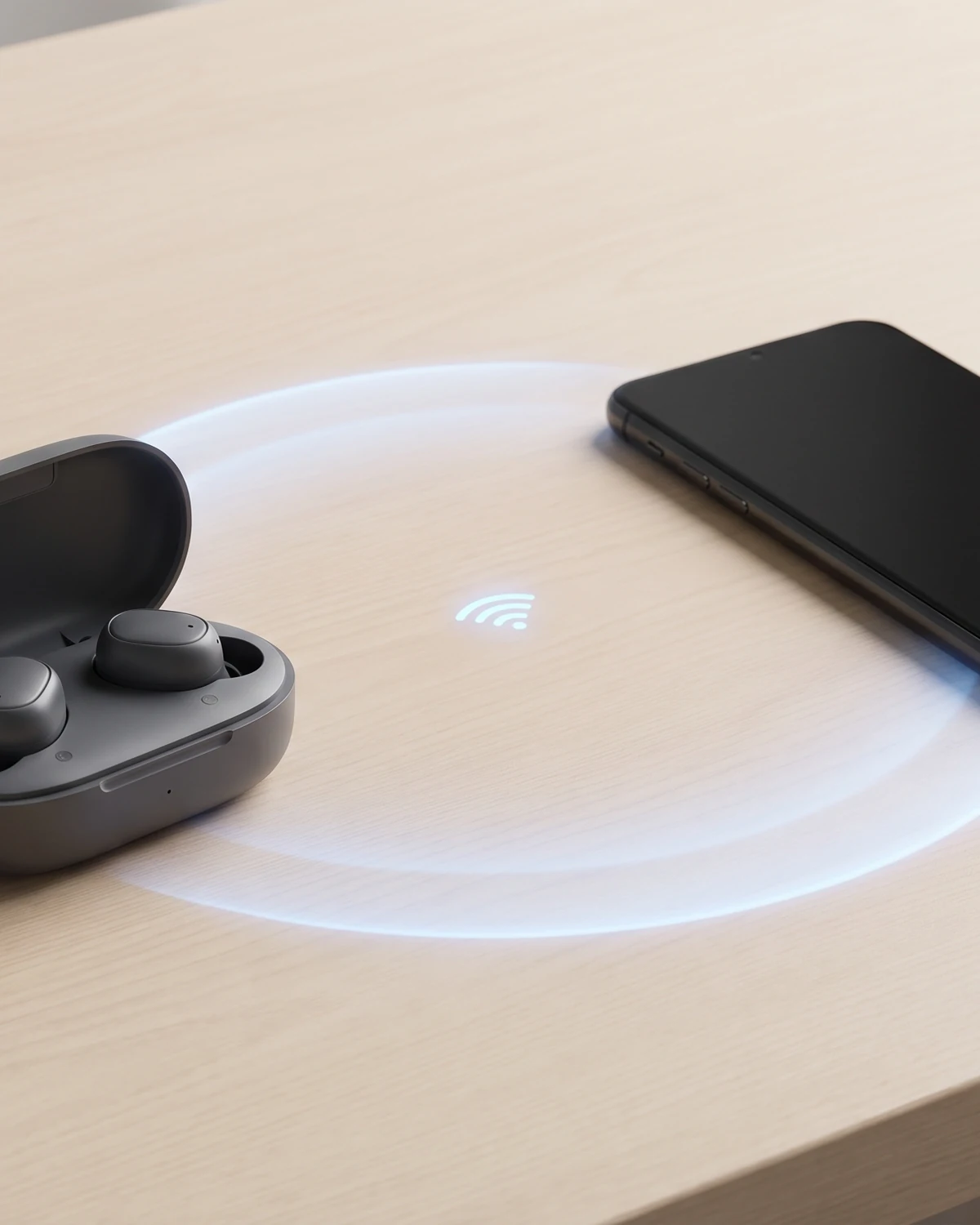
Bluetooth is a short-range radio system. Your devices each contain a tiny radio chip that transmits in the 2.4 gigahertz band — the same free-to-use slice of spectrum as Wi-Fi and microwave ovens. When two devices pair, they agree on a shared secret and then talk in short bursts, hopping between dozens of frequencies many hundreds of times per second so they dodge interference and stay private.67 words · written for a clear narration pace
The Flash Answer
Bluetooth is a short-range radio system. Your devices each contain a tiny radio chip that transmits in the 2.4 gigahertz band — the same free-to-use slice of spectrum as Wi-Fi and microwave ovens. When two devices pair, they agree on a shared secret and then talk in short bursts, hopping between dozens of frequencies many hundreds of times per second so they dodge interference and stay private. Because the signal is deliberately weak — often just 1 milliwatt — it reaches across a room, not across town, which is exactly the point: low power means long battery life and less interference for everyone else.
A radio, but a deliberately tiny one
Strip away the branding and Bluetooth is simply radio — the same physics as FM broadcasts, just engineered for the opposite goal. A radio station wants one powerful transmitter to reach a whole city. Bluetooth wants millions of feeble transmitters that reach only a few metres, so that everyone's gadgets can chatter simultaneously without shouting over each other.
The chips transmit in the 2.4 GHz ISM band, an internationally reserved slice of spectrum that is free for anyone to use without a licence. Classic Bluetooth devices typically transmit at about 1 milliwatt — roughly a thousandth of the power of a phone's cellular radio. That tiny output is a feature, not a weakness: it keeps battery drain minuscule and naturally limits eavesdropping range.
Key fact
A typical Bluetooth earbud transmits at about 1 milliwatt — around one-thousandth of the peak power your phone uses to reach a cell tower kilometres away.
The pairing handshake
Before two devices can talk, they must pair. When you put earbuds into pairing mode, they broadcast a short advertisement: effectively, 'I am a pair of earbuds, and I am available.' Your phone listens, shows you the name, and when you tap it, the two devices perform a cryptographic handshake and derive a shared secret key that both store.
From then on the two remember each other, reconnect automatically, and encrypt their traffic with keys descended from that first handshake. This is why pairing usually happens only once — and why modern Bluetooth is far harder to snoop on than the early versions from two decades ago.
Advertise
The accessory broadcasts its name and capabilities on standard advertising channels.
Connect
Your phone responds, and the two negotiate roles — one central device, one peripheral.
Bond
A cryptographic handshake creates a shared secret key both devices store for future encrypted sessions.
Stream
Data flows in short, scheduled bursts — audio, keystrokes, heart-rate readings — hopping across frequencies as it goes.
Frequency hopping: the crowded-room trick
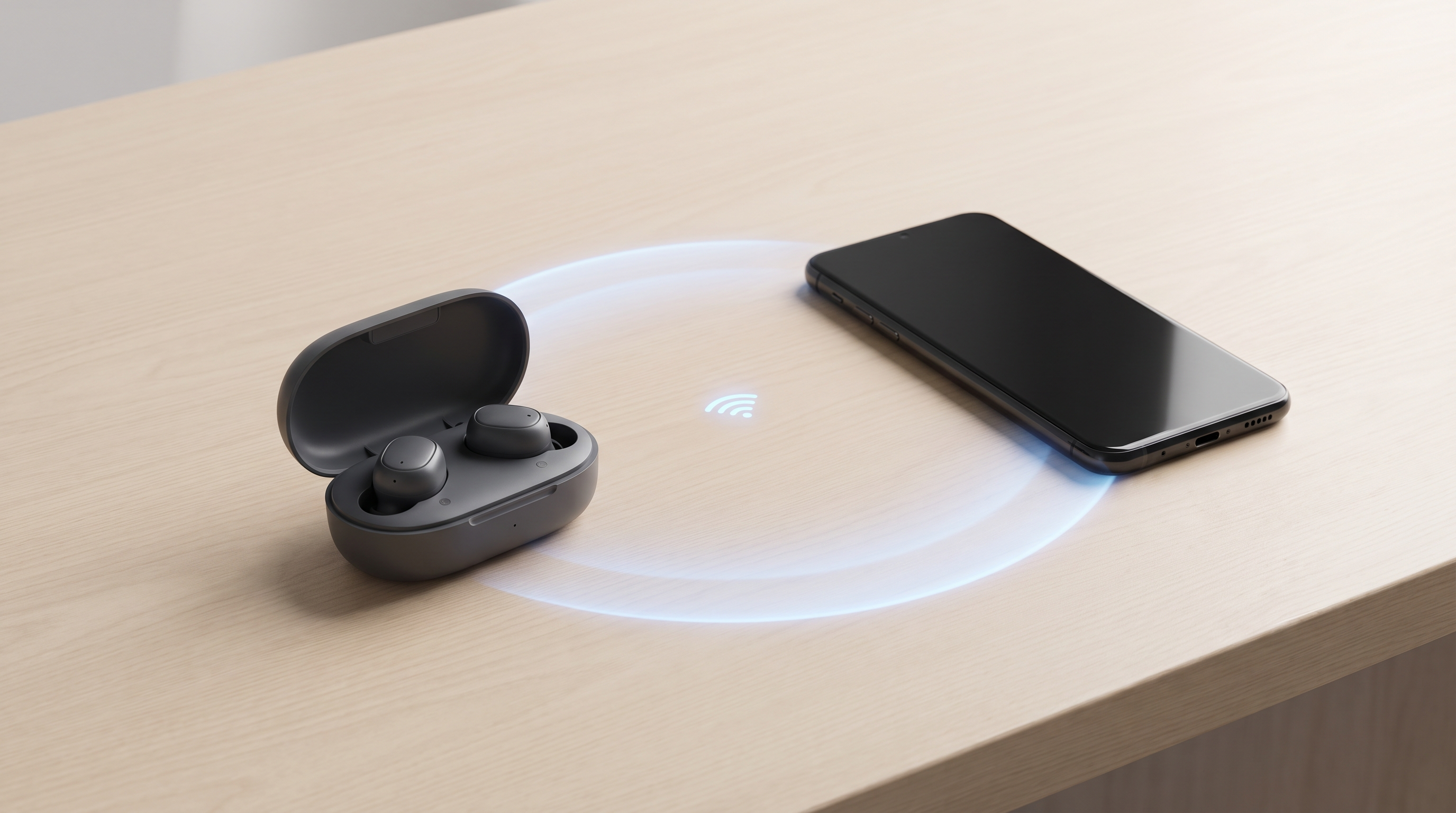
The 2.4 GHz band is the busiest neighbourhood in wireless: Wi-Fi routers, baby monitors, other Bluetooth devices and even microwave ovens all leak energy into it. Bluetooth's classic defence is adaptive frequency hopping. The band is divided into 79 channels (40 wider ones for Bluetooth Low Energy), and a connected pair of devices jumps between them in a pseudo-random sequence — up to 1,600 hops per second — that both devices compute from their shared connection details.
If interference clobbers one channel, only a millisecond-scale slice of data is lost and quickly re-sent on the next hop; the adaptive part means the pair also learns which channels are persistently noisy — say, the ones your Wi-Fi router occupies — and drops them from the rotation. The hop sequence looks like noise to outsiders, which also makes casual interception much harder.
This idea has a famous pedigree: frequency hopping was co-patented in 1942 by Hollywood actress Hedy Lamarr and composer George Antheil as a way to protect torpedo guidance signals from jamming. Their piano-roll-inspired scheme was decades ahead of the electronics needed to make it practical.
Classic vs Low Energy: two Bluetooths in one
Since version 4.0, 'Bluetooth' has really been two radios sharing a name and a chip. Classic Bluetooth maintains a continuous connection and suits steady streams — music to your headphones, voice to your car. Bluetooth Low Energy (BLE) instead sleeps almost all the time and wakes for milliseconds to exchange tiny packets, then sleeps again.
That duty-cycle trick is why a fitness tracker or a tile-style key finder can run for months or years on a coin cell: its radio might be awake for less than one percent of the day. BLE is also what powers device-finding networks and the contact-tracing frameworks deployed during the COVID-19 pandemic — billions of phones quietly exchanging anonymous BLE beacons.
Range, meanwhile, is a spectrum rather than a single number. Most earbuds and keyboards are Class 2 devices good for roughly 10 metres indoors; Class 1 devices, and the long-range coded modes added in Bluetooth 5, can reach hundreds of metres outdoors with clear line of sight. Walls, water and — inconveniently — the human body all absorb 2.4 GHz radio, which is why your audio can stutter when your phone is in a back pocket on the opposite side of your body from your earbud.
Key fact
A Bluetooth Low Energy sensor can spend over 99% of its life asleep, waking for just milliseconds at a time — the secret behind coin-cell gadgets that run for a year.
Why the odd name?
Bluetooth is named after Harald 'Bluetooth' Gormsson, the tenth-century Scandinavian king credited with uniting Denmark and Norway. Engineers at Intel, Ericsson and Nokia used it as a codename for a project meant to unite the fragmented world of cables and connectors — and the placeholder stuck. The logo you see on your phone is a bind rune combining the Younger Futhark runes for H and B, the king's initials.
The name turned out to be apt. From its first headset in 1999, Bluetooth has grown into one of the most successful standards in consumer electronics, with the Bluetooth SIG reporting billions of devices shipped every year — every one of them still performing the same basic magic: a whispered, hopping, encrypted radio conversation across the room.
Key takeaways
- Bluetooth is short-range radio in the licence-free 2.4 GHz band — the same physics as any radio, tuned for low power instead of long range.
- Pairing is a one-time cryptographic handshake; devices then reconnect and encrypt automatically.
- Connections hop between up to 79 channels as often as 1,600 times per second to dodge interference.
- Frequency hopping was co-invented in 1942 by actress Hedy Lamarr and composer George Antheil.
- Bluetooth Low Energy sleeps most of the time, letting sensors run for months on a coin cell.
- The name honours Harald Bluetooth, the Viking king who united Denmark and Norway — the logo is his initials in runes.
Frequently asked questions
Does Bluetooth use mobile data or the internet?
No. Bluetooth is a direct device-to-device radio link and needs no network, SIM card or internet connection. That is why your earbuds work on a plane in airplane mode once Bluetooth is re-enabled.
Is Bluetooth safe — is the radiation harmful?
Bluetooth uses non-ionising radio waves at power levels typically hundreds of times lower than a phone's cellular transmitter. Health authorities including the WHO have found no established health risk from such low-power radio exposure.
Why does my Bluetooth audio sometimes cut out?
The 2.4 GHz band is crowded and easily absorbed. Interference from Wi-Fi or microwaves, distance, walls, or your own body between the devices can break enough packets to cause dropouts. Moving the devices closer or to the same side of your body usually helps.
Can someone hack my Bluetooth?
Modern Bluetooth encrypts traffic and requires pairing, and its short range limits attackers to your immediate vicinity. Real vulnerabilities have been found over the years, though, so the standard advice applies: keep device software updated and reject unexpected pairing requests.
Sources & further reading
This explainer was prepared through desk research using the sources below; established facts are distinguished from open questions in the text. See our editorial methodology.
- Bluetooth SIG — How Bluetooth Technology Works; Bluetooth Core Specification overview.
- IEEE Spectrum — coverage of Bluetooth, frequency hopping and the 2.4 GHz ISM band.
- U.S. National Inventors Hall of Fame — Hedy Lamarr and George Antheil, frequency-hopping patent (US 2,292,387, 1942).
- World Health Organization — Electromagnetic fields and public health: radiofrequency exposure fact sheets.
- Bluetooth SIG — Bluetooth Market Update (annual device shipment figures).
Spotted an error? We correct verified mistakes promptly — email contact@flashscience.org.
Continue exploring
Three questions to read next.
 Science explainedHow Does GPS Know Where You Are?Read next →
 Science explainedHow Does Sunscreen Work?Read next →
 Science explainedWhat Would Happen If the Sun Suddenly Disappeared?Read next →