
Narration · approximately 40 seconds
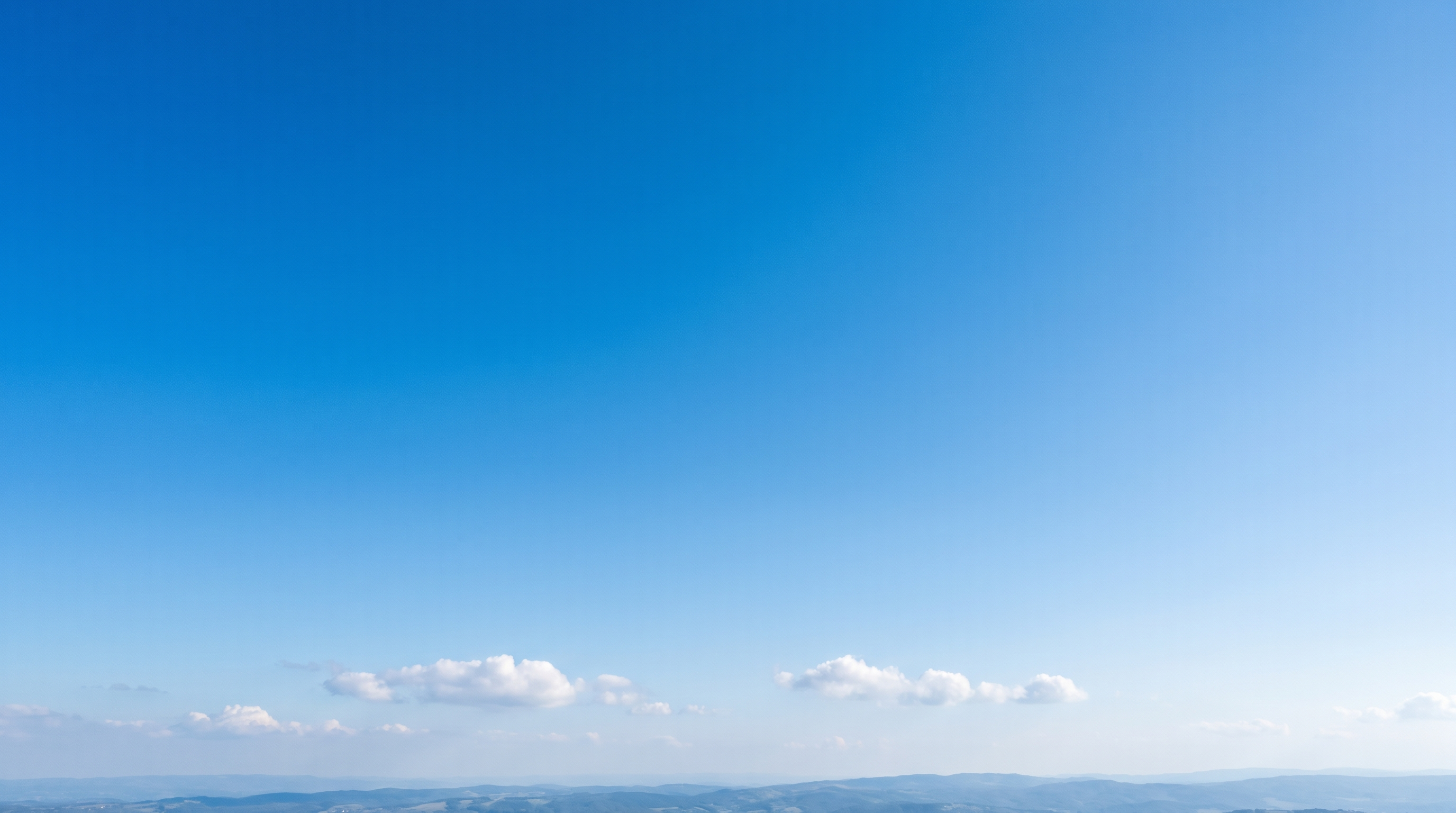
The sky is blue because of the way sunlight interacts with the air. Sunlight looks white but is really a mix of all colours, each with its own wavelength. When it enters the atmosphere, it collides with countless tiny gas molecules, which scatter the light in all directions. Crucially, they scatter short-wavelength blue light far more strongly than long-wavelength red light — around ten times more. So blue light gets bounced all across the sky and reaches your eyes from every direction, painting the whole dome blue.87 words · written for a clear narration pace
The Flash Answer
The sky is blue because of the way sunlight interacts with the air. Sunlight looks white but is really a mix of all colours, each with its own wavelength. When it enters the atmosphere, it collides with countless tiny gas molecules, which scatter the light in all directions. Crucially, they scatter short-wavelength blue light far more strongly than long-wavelength red light — around ten times more. So blue light gets bounced all across the sky and reaches your eyes from every direction, painting the whole dome blue. The same effect, seen through much more air at sunset, is why the setting Sun turns red.
White light is secretly every colour
The starting point for a blue sky is something that seems to have nothing to do with blue: the Sun's light is white. But white light is not a colour of its own — it is all colours mixed together. When sunlight passes through a prism or a raindrop, it fans out into the familiar spectrum from red through orange, yellow, green and blue to violet, revealing the hidden ingredients that were there all along.
Each of those colours is light of a different wavelength. Red light has the longest waves in the visible range, violet and blue the shortest, with the others in between. That difference in wavelength is the single most important fact for understanding the sky, because it turns out that light of different wavelengths behaves very differently when it meets the air.
Key fact
Sunlight looks white but contains every colour of the rainbow, and each colour is light of a different wavelength — blue short, red long.
Air molecules scatter blue the most
The atmosphere is full of gas molecules, mainly nitrogen and oxygen, far too small to see. When sunlight streams through, it constantly bumps into these molecules, and each collision sends a little of the light ricocheting off in a new direction. This redirecting of light is called scattering, and it is the key to the blue sky.
The amount of scattering depends sharply on wavelength. Small molecules scatter short wavelengths much more powerfully than long ones — the effect is so steep that blue light is scattered roughly ten times more strongly than red. This is known as Rayleigh scattering, after the physicist who explained it. Red and yellow light largely pass straight through the air, while blue light is caught and flung repeatedly in all directions.
That scattered blue light is what fills the sky. When you look up at any patch of sky away from the Sun, the light reaching your eye is sunlight that has been bounced toward you by the air itself. Because blue is scattered so much more than the rest, that light is predominantly blue, and so the whole sky glows blue.
Sunlight enters the air
White light from the Sun streams into the atmosphere full of tiny gas molecules.
Molecules scatter the light
Each molecule redirects some light in all directions — this is Rayleigh scattering.
Blue scatters far more
Short blue wavelengths are scattered roughly ten times more than long red ones.
Blue fills the sky
Scattered blue light reaches your eyes from every direction, so the sky looks blue.
Why not violet?
If shorter wavelengths scatter more, a sharp question follows: violet light has an even shorter wavelength than blue, so why isn't the sky violet? The answer comes down to a combination of the Sun and our own eyes. The Sun sends out less violet light than blue to begin with, and some of the violet is absorbed high in the atmosphere, so there is simply less violet in play.
On top of that, human eyes are far more sensitive to blue than to violet. Our colour vision relies on three types of receptors, and the way they respond to the scattered mix of short-wavelength light adds up to a signal the brain reads as blue rather than violet. The sky is really scattering a blend of blue and violet, but between the Sun's output and our eyes' sensitivity, we perceive it as a clean, familiar blue.
The same physics paints red sunsets
One of the nicest things about the blue-sky explanation is that it also explains sunsets, using the very same scattering. The difference is the path the light takes. When the Sun is overhead, its light passes through a relatively thin slice of atmosphere to reach you. When the Sun is low at sunrise or sunset, its light skims in at a shallow angle and travels through a far greater thickness of air before it arrives.
Over that long path, almost all the blue light is scattered away sideways long before it reaches your eye, leaving mainly the longer wavelengths — the reds and oranges — to continue straight through to you. That is why the setting Sun and the sky around it glow warm red and orange. Dust, smoke and haze in the air can scatter and filter the light further, which is why some sunsets are far more vivid than others.
So blue midday skies and red sunsets are not two separate mysteries. They are the same molecules scattering the same sunlight; only the amount of air the light must cross has changed.
Clearing up a common mix-up
A widespread belief is that the sky is blue because it reflects the blue of the oceans. It is an understandable guess, but it gets the direction of cause and effect backwards. The sky is blue over vast deserts, over ice caps and over landlocked continents thousands of kilometres from any sea, and it would be blue on a world with no oceans at all, as long as it had a similar atmosphere.
If anything, the influence runs the other way: the open ocean often looks blue partly because it reflects the blue sky above it, as well as because water itself absorbs reds. The blue of the sky is made in the air by scattering, entirely independent of what lies on the ground below.
✗ The myth
The sky is blue because it reflects the ocean
The blue overhead is supposedly a mirror image of all the blue water on Earth's surface.
✓ The evidence
The blue is made in the air
The sky is just as blue over deserts and continents far from any sea. Its colour comes from air molecules scattering blue sunlight, not from reflecting the oceans — in fact the sea partly looks blue because it reflects the sky.
Key takeaways
- Sunlight is white but contains all colours, each with a different wavelength — blue short, red long.
- Air molecules scatter short blue wavelengths about ten times more than long red ones, an effect called Rayleigh scattering.
- Scattered blue light reaches your eyes from all over the sky, so the whole daytime sky looks blue.
- The sky is not violet because the Sun emits less violet and human eyes are more sensitive to blue.
- Sunsets are red because low-angle sunlight crosses much more air, scattering the blue away and leaving red and orange.
- The sky is not blue from reflecting oceans — it is blue over deserts and inland too, because the colour is made in the air.
Frequently asked questions
Why is the sky blue and not violet, if violet scatters even more?
The Sun emits less violet light than blue, some violet is absorbed high up, and human eyes are much more sensitive to blue than violet. The combination makes the scattered light look blue to us even though violet is scattered slightly more.
Why do sunsets turn red?
At sunset the Sun's light travels through far more atmosphere to reach you. Along that long path nearly all the blue light is scattered away, leaving mostly red and orange light to pass through, so the Sun and nearby sky glow red.
Why is space black if the sky is blue?
There is almost no air in space to scatter sunlight, so away from the Sun there is nothing to redirect light toward your eyes. With no scattering, the sky simply looks black.
Is the sky blue because of the ocean?
No. The sky is blue over deserts and inland regions with no ocean nearby. Its colour comes from air molecules scattering blue sunlight; the ocean itself often looks blue partly because it reflects the blue sky.
Sources & further reading
This explainer was prepared through desk research using the sources below; established facts are distinguished from open questions in the text.
- NASA Space Place — Why Is the Sky Blue?, NASA/JPL.
- NOAA SciJinks — Why Is the Sky Blue?, National Oceanic and Atmospheric Administration.
- Encyclopaedia Britannica — Rayleigh scattering and the colour of the sky, Britannica.
- University Corporation for Atmospheric Research (UCAR) Center for Science Education — Blue Skies and Red Sunsets.
- NASA Science — Light and the electromagnetic spectrum / wavelengths of visible light, NASA.
More Flash Science explainers are being published regularly. Questions or corrections? Email contact@flashscience.org.
Continue exploring
Three questions to read next.
 How Things WorkHow Do Airplanes Fly?Read next →
 How Things WorkHow Do Batteries Work?Read next →
 How Things WorkHow Do Noise-Cancelling Headphones Work?Read next →