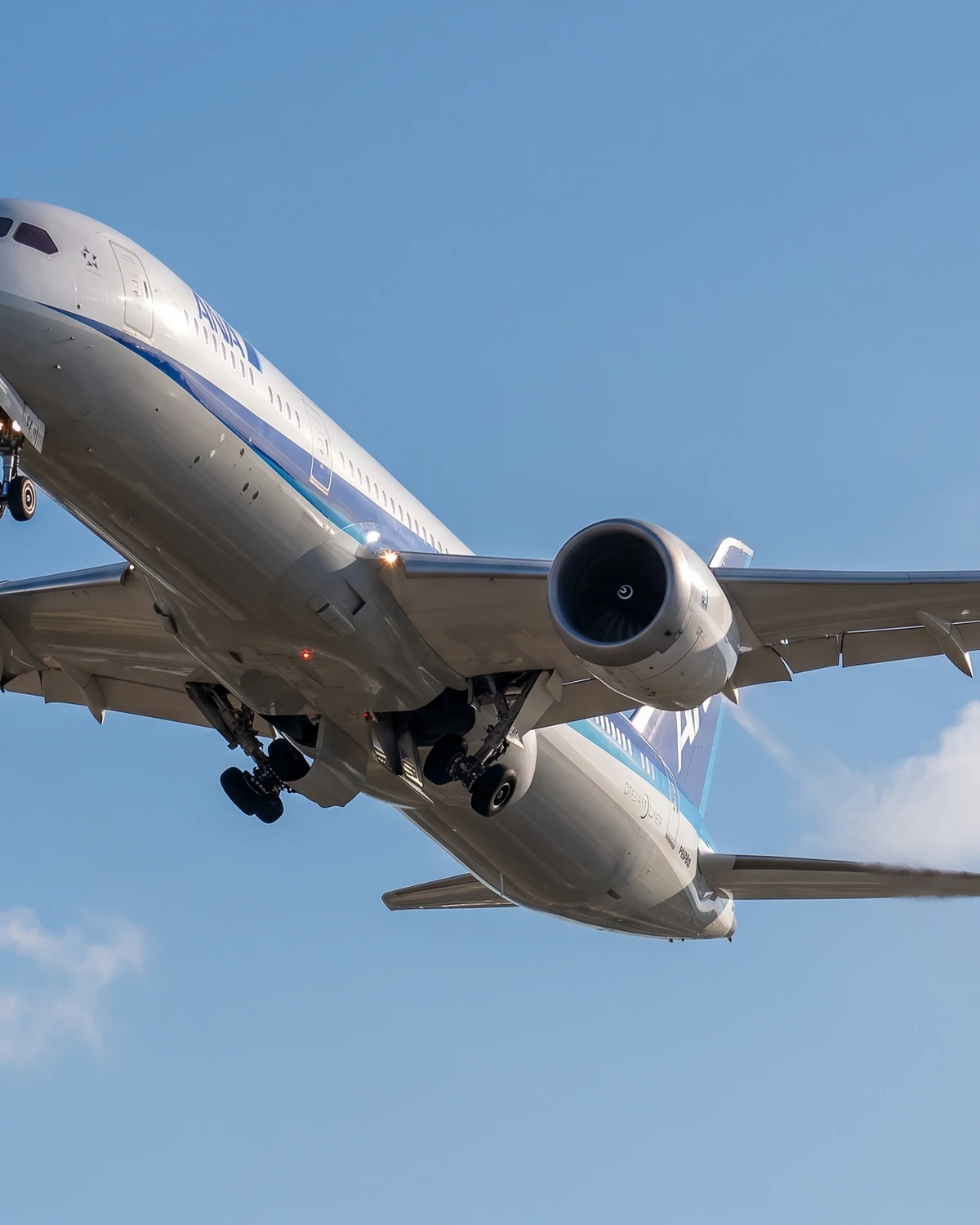
Narration · approximately 40 seconds
An airplane flies because its wings throw a huge amount of air downward, and by Newton's third law that air pushes the wing upward with an equal force. This upward push is called lift, and when it grows large enough it balances the plane's weight and holds it in the sky. Two things make the wing throw air down: the curved shape of the wing and the slight upward tilt at which it meets the oncoming air, called the angle of attack.82 words · written for a clear narration pace
The Flash Answer
An airplane flies because its wings throw a huge amount of air downward, and by Newton's third law that air pushes the wing upward with an equal force. This upward push is called lift, and when it grows large enough it balances the plane's weight and holds it in the sky. Two things make the wing throw air down: the curved shape of the wing and the slight upward tilt at which it meets the oncoming air, called the angle of attack. The engines do a separate job — they provide thrust to push the plane forward fast enough for the wings to work. In short, thrust gives speed, speed lets the wings make lift, and lift beats gravity.
The four forces in every flight
Every airplane in the air is caught in a tug-of-war between four forces, and understanding flight really means understanding how they balance. Two act vertically: lift pushes the plane up, and weight — gravity acting on the plane's mass — pulls it down. Two act horizontally: thrust from the engines pushes the plane forward, and drag, the resistance of the air, holds it back.
The rule is simple. To climb, lift must exceed weight; to stay level, they must be equal. To speed up, thrust must exceed drag; to hold a steady speed, they balance. A cruising airliner is a machine finely tuned so that all four forces sit in equilibrium, which is why level flight feels so smooth and effortless even though the plane is working hard to maintain it.
Crucially, lift and thrust are produced by different parts of the aircraft. The wings make lift; the engines make thrust. Confusing the two is the root of most misunderstandings about flight, so it is worth keeping them firmly separate as we go.
Key fact
Flight is a balance of four forces: lift versus weight, and thrust versus drag. Climbing simply means making lift bigger than weight.
Where lift really comes from
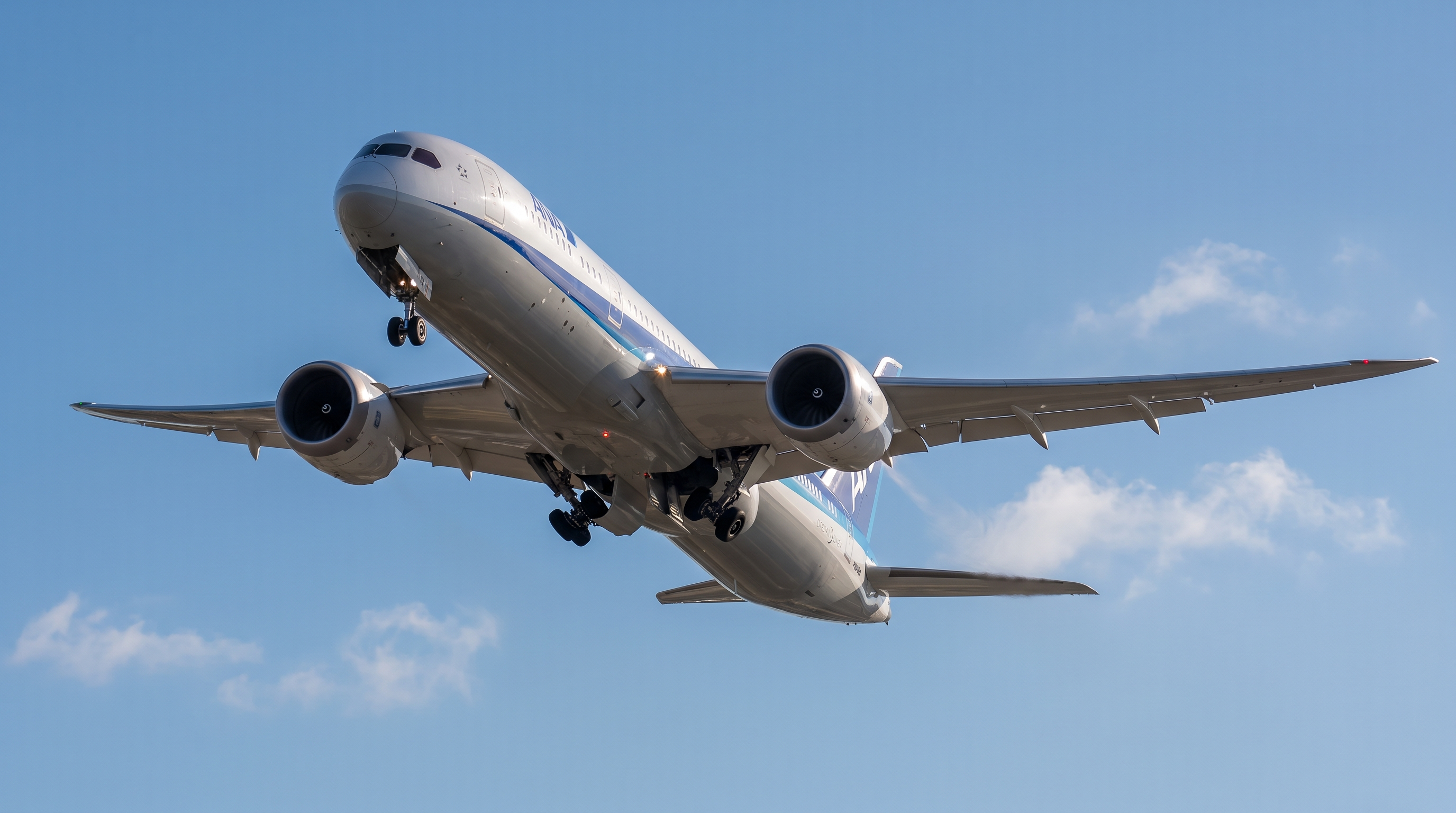
The heart of flight is the wing, and the honest explanation of how it works is beautifully simple: the wing pushes air downward, so the air pushes the wing upward. This is Newton's third law of motion — every action has an equal and opposite reaction. A wing in flight is constantly deflecting a great mass of air toward the ground, and the reaction to flinging all that air down is a force that lifts the wing up.
The wing manages this in two connected ways. Its top surface is curved, so air flowing over it is guided downward as it leaves the trailing edge. And the whole wing usually meets the oncoming air at a slight upward tilt — the angle of attack — which deflects even more air downward. Increase that angle, within limits, and the wing throws down more air and generates more lift, which is exactly what a pilot does when raising the nose to climb.
You may also hear lift explained through air pressure: the air moving over the curved top of the wing is faster and at lower pressure than the air beneath, and that pressure difference sucks and pushes the wing upward. This is also true. The pressure description and the air-deflection description are two views of the same physics, not rival theories, and both are used by engineers.
Air meets the wing
The wing moves forward through the air at a slight upward tilt, the angle of attack.
The wing deflects air down
Its curved shape and tilt bend a large mass of air downward as it passes.
The air pushes back
By Newton's third law, deflecting air downward produces an equal upward push — lift.
Lift lifts the plane
When lift exceeds the plane's weight, the aircraft rises.
Why speed is everything
A wing sitting still makes no lift at all — it must be moving through the air, and the faster it moves, the more air it can deflect each second. This is why an airplane cannot simply levitate; it has to be driven forward fast enough for its wings to generate enough lift to carry its weight. That is the engines' entire purpose: to provide thrust that pushes the aircraft forward and builds up the speed lift depends on.
The relationship is powerful because lift rises with the square of speed: double the airspeed and, all else equal, the wing produces roughly four times the lift. On takeoff, a pilot accelerates down the runway until the airspeed is high enough that lift finally exceeds weight, and the plane rises. Slow down too much in flight and the wing can no longer make enough lift — a dangerous condition called a stall, which is why minimum speeds matter so much in aviation.
Jet engines and propellers create thrust by the same Newtonian principle as the wing itself: they push a large mass of air backward, and the air pushes the engine — and the plane — forward. So both the forward motion and the lifting force ultimately come down to pushing air one way to be pushed the other.
Clearing up the most common myth
Many of us were taught that air splits at the front of the wing and the two halves must meet again at the back, so the air going over the longer curved top has to travel faster to keep up. This is often called the equal transit-time explanation, and it is simply wrong. There is no law of nature that requires the air above and below to arrive at the trailing edge together, and in reality the air over the top reaches the back well ahead of the air underneath.
The myth is not just a technicality — it makes wrong predictions. It suggests a flat wing or a symmetrical wing could not produce lift, yet paper airplanes fly and aerobatic jets fly upside down using exactly the angle-of-attack effect the myth ignores. The reliable way to think about lift is that the wing deflects air downward, by both its shape and its tilt, and gets pushed up in return.
✗ The myth
Air must rejoin at the wing's trailing edge
Air splitting at the front supposedly has to speed up over the longer top surface to meet the bottom air at the back, and that is what makes lift.
✓ The evidence
Deflection, not a meeting rule
Nothing forces the two airflows to reunite, and the top flow actually arrives first. Lift comes from the wing deflecting air downward via its shape and angle of attack — which is why even flat wings and inverted jets can fly.
Staying up and steering
Generating lift is only half of flying; a plane also has to be controlled. Aircraft steer using hinged surfaces that change how the air is deflected. Ailerons on the outer wings tilt the plane into turns by making one wing lift more than the other. The elevator on the tail raises or lowers the nose, changing the angle of attack and thus the climb or descent. The rudder on the vertical tail swings the nose left or right. Together these let a pilot control the aircraft's motion in all three dimensions.
Wings also carry devices to change their lifting power on demand. Flaps extend from the back of the wing during takeoff and landing to increase its area and curvature, letting the plane make enough lift at the lower speeds needed near the ground. Spoilers do the opposite, disrupting lift to help the plane descend or slow down after touchdown. A modern wing is not a fixed shape but an adjustable lifting surface.
From gliders to jumbo jets
The same physics scales from a paper dart to the largest airliners. A glider has no engine at all; it trades a slow, steady loss of height for the forward motion its wings need, essentially gliding downhill through the air, and skilled pilots use rising air currents to stay aloft for hours. A heavy jet uses powerful engines to sustain the speed its wings require, but the wing is doing the identical job of deflecting air downward.
What lets enormous aircraft fly is not a different principle but a matter of scale and engineering: very large wings, high speeds, and powerful engines, all balanced so that lift can match an immense weight. There is nothing mysterious holding a jumbo jet up. It is pushing a colossal amount of air downward every second, and that air is pushing back just as hard.
Key takeaways
- Flight balances four forces: lift against weight, and thrust against drag; climbing means lift exceeds weight.
- Lift comes from the wing deflecting air downward, so by Newton's third law the air pushes the wing up.
- Both the wing's curved shape and its angle of attack deflect air; the pressure-difference view describes the same physics.
- Wings only work when moving, so engines provide thrust to reach the speed lift depends on; lift rises with the square of speed.
- The equal transit-time explanation is a myth — nothing forces the airflows to rejoin, and even flat or inverted wings make lift.
- Control surfaces and flaps adjust how air is deflected, letting planes steer and change lift for takeoff and landing.
Frequently asked questions
Do airplanes fly because of Bernoulli or Newton?
Both, because they describe the same thing. The wing deflects air downward (Newton's third law), and that same flow creates lower pressure above the wing than below (Bernoulli). Engineers use both descriptions; they are not competing theories.
Why can planes fly upside down?
Because lift depends mainly on the angle of attack — the tilt of the wing to the oncoming air — not just the wing's shape. An inverted plane simply adjusts its angle so the wings still deflect air downward relative to the ground and produce upward lift.
What is a stall?
A stall happens when the wing meets the air at too steep an angle or the plane flies too slowly, and the smooth airflow breaks away from the wing. Lift drops sharply. Pilots recover by lowering the nose and gaining speed to restore normal airflow.
Why do planes need such long runways?
Because a wing must be moving fast to make enough lift to raise the plane's weight. The runway gives the engines room to accelerate the aircraft to that lift-off speed, and to stop safely if a takeoff is aborted.
Sources & further reading
This explainer was prepared through desk research using the sources below; established facts are distinguished from open questions in the text.
- NASA Glenn Research Center — Four Forces on an Airplane and Lift from Flow Turning, NASA.
- NASA Glenn Research Center — Incorrect Lift Theory (equal transit time), NASA.
- Encyclopaedia Britannica — Aerodynamics and how a wing generates lift, Britannica.
- FAA — Pilot's Handbook of Aeronautical Knowledge, chapters on aerodynamics of flight, Federal Aviation Administration.
- Scientific American — No One Can Explain Why Planes Stay in the Air (on lift explanations), Scientific American.
More Flash Science explainers are being published regularly. Questions or corrections? Email contact@flashscience.org.
Continue exploring
Three questions to read next.
 How Things WorkHow Do Batteries Work?Read next →
 How Things WorkHow Do Noise-Cancelling Headphones Work?Read next →
 How Things WorkHow Do Rainbows Form?Read next →