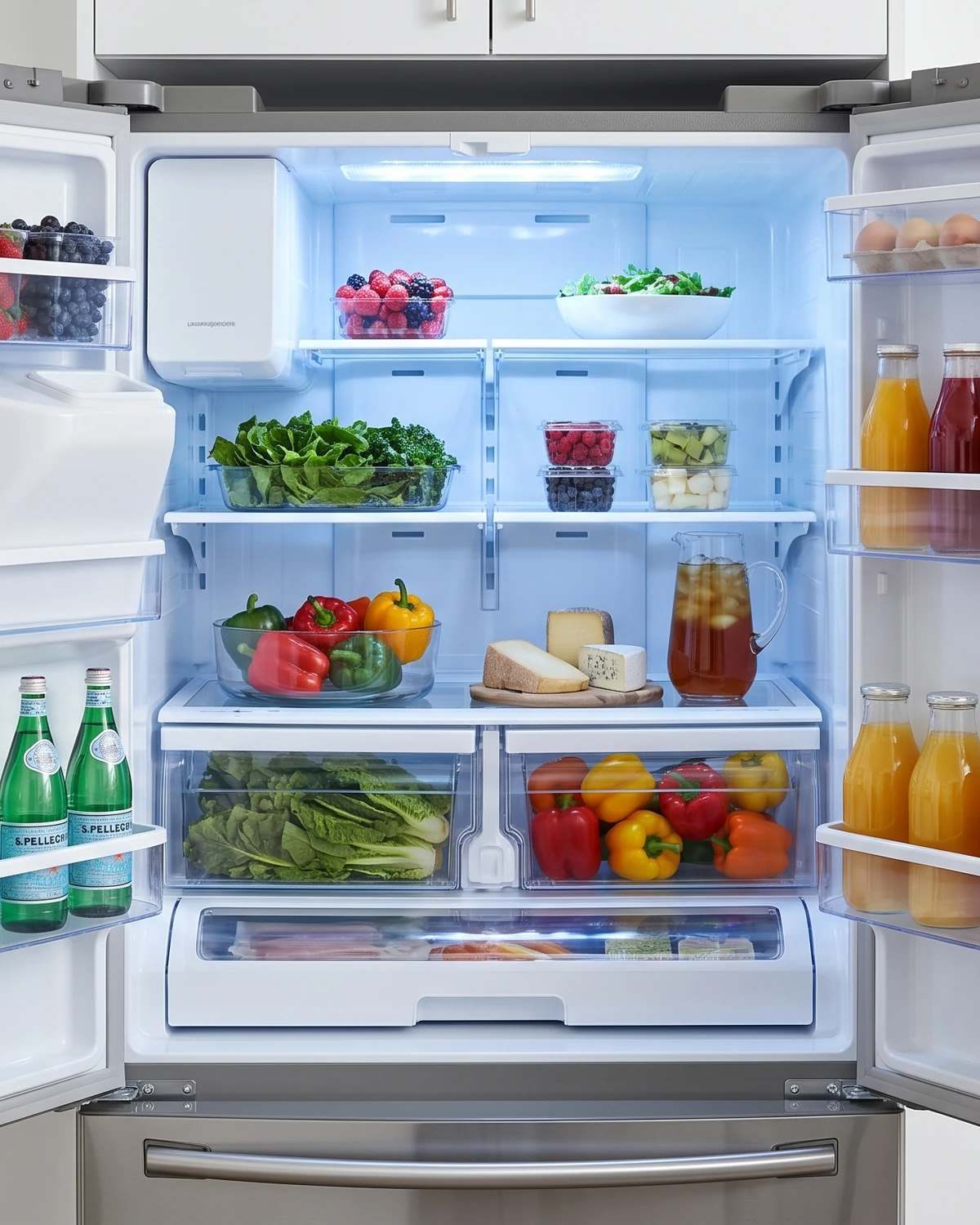
Narration · approximately 40 seconds
A refrigerator keeps food cold not by making cold but by removing heat. There is no such thing as cold to add; cold is simply the absence of heat, so cooling something means taking heat away from it. A fridge does this with a special fluid called a refrigerant that circulates in a loop. Inside the fridge the refrigerant evaporates and soaks up heat from the food and air, making them colder.72 words · written for a clear narration pace
The Flash Answer
A refrigerator keeps food cold not by making cold but by removing heat. There is no such thing as cold to add; cold is simply the absence of heat, so cooling something means taking heat away from it. A fridge does this with a special fluid called a refrigerant that circulates in a loop. Inside the fridge the refrigerant evaporates and soaks up heat from the food and air, making them colder. It then carries that heat outside the cabinet, where it is squeezed and cooled so it releases the heat into your kitchen. The cycle repeats endlessly, continually pumping heat from inside to outside, which is why the back of a fridge feels warm.
Cold is not a thing you can add
The single idea that makes refrigerators make sense is that cold is not a substance. There is no cold to pump into your food the way you pump air into a tyre. What we call cold is just a lack of heat, and heat is the energy of jiggling molecules. So the only way to cool something is to take heat out of it and carry that heat somewhere else. A refrigerator is, at heart, a heat-moving machine — a pump for heat rather than for water.
This runs into a natural obstacle. Heat, left to itself, always flows from hot to cold, never the other way. Your warm food in a cool fridge would happily give up its heat, but the fridge as a whole has to do something harder: keep pulling heat out of its already-cold interior and push it out into the warmer kitchen — moving heat in the wrong direction. Doing that against the natural flow takes energy, which is why a fridge has to be plugged in and runs a motor.
Key fact
A refrigerator doesn't create cold — it removes heat. Cooling means moving heat out of the food and dumping it into the room, which is why the back of a fridge is warm.
The refrigerant that carries heat away
The heat-carrier is a fluid called a refrigerant, chosen because it boils and condenses at convenient temperatures. It flows around a sealed loop of pipes, changing between liquid and gas as it goes, and each change is used to pick up or release heat. The magic lies in a simple piece of physics: when a liquid evaporates into a gas it absorbs heat from its surroundings, and when a gas condenses back into a liquid it gives that heat up. It is the same reason sweat cooling on your skin, or a splash of alcohol on your hand, feels cold as it evaporates.
Inside the fridge, in coils called the evaporator, the refrigerant is allowed to evaporate. As it turns to gas it drinks in heat from the air and food around it, chilling the interior. The now-warm refrigerant gas then travels out of the food compartment carrying that stolen heat with it, ready to be dealt with outside.
Evaporate and absorb heat
Inside the fridge, the refrigerant evaporates in the cold coils, soaking up heat from the food and air.
Compress the gas
A compressor squeezes the warm refrigerant gas, raising its pressure and temperature.
Condense and release heat
In the coils outside, the hot gas condenses back to liquid and dumps its heat into the room.
Expand and cool
The liquid passes through a valve that drops its pressure, chilling it so it is ready to evaporate again.
Squeezing and expanding to move heat uphill
To force heat out into a warmer kitchen, the fridge plays a clever trick with pressure. After the refrigerant has absorbed heat inside, a pump called the compressor squeezes the gas hard. Compressing a gas raises its temperature, so the refrigerant emerges from the compressor hotter than the kitchen air — and that is the whole point. Now that it is hotter than the room, heat can flow naturally from it to the room.
This hot, high-pressure gas passes through the condenser coils, usually a black grille on the back or underneath the fridge. There it releases its heat into the kitchen and condenses back into a liquid. Finally the liquid passes through a narrow expansion valve, where its pressure suddenly drops. Just as compressing a gas heats it, letting it expand cools it, so the refrigerant comes out of the valve very cold, ready to head back inside and absorb more heat. Round and round it goes, ferrying heat from the cold interior to the warm exterior.
Why an open fridge won't cool the kitchen
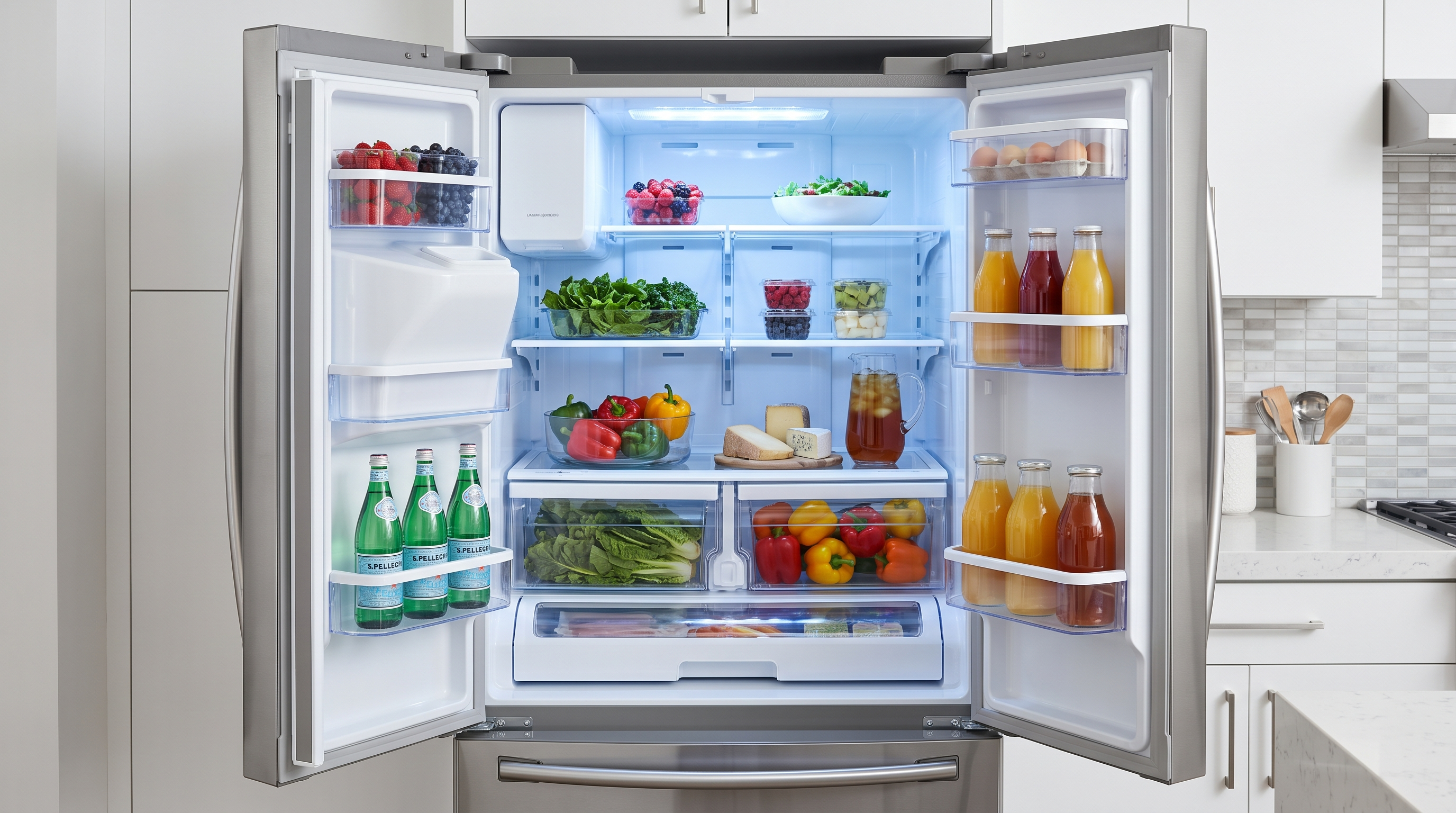
Because a fridge feels like a box of cold, people sometimes imagine you could cool a hot kitchen by leaving its door open. In fact this does the opposite: it warms the room. The reason follows directly from the fridge being a heat pump, not a heat source of cold. With the door open, the fridge frantically pulls heat from the room air in front of it and dumps that heat straight back into the same room through its rear coils.
If it merely broke even, the room temperature would not change. But the compressor motor also uses electricity and produces waste heat of its own, and all of that ends up in the kitchen too. So the net effect of an open, running fridge is to add heat to the room, not remove it. An air conditioner solves this by putting its hot coils outside the house, dumping the heat where you do not care about it — the very trick an open fridge lacks.
✗ The myth
Leaving the fridge door open will cool the room
A fridge is a source of cold, so opening it should chill a hot kitchen.
✓ The evidence
It moves heat in a loop — plus waste
A fridge only moves heat from its inside to its back coils. With the door open it pulls heat from the room and dumps it right back, and the motor adds waste heat on top. The net result is a warmer room, not a cooler one.
The same idea, all over the house
Once you see a refrigerator as a heat pump, a whole family of appliances suddenly makes sense, because they all use the identical cycle. An air conditioner is essentially a fridge that cools a room instead of a cabinet, with its hot condenser coils placed outside the window so the heat is carried out of the house. A freezer is the same machine tuned to run colder.
Even a heat pump used for home heating is this cycle run deliberately, sometimes in reverse: it gathers heat from the cool outdoor air — yes, even chilly air contains heat energy — and pumps it indoors to warm the house. All of these devices rest on the same two facts: that evaporating and condensing a fluid moves heat, and that squeezing and expanding it lets you choose which direction the heat goes. A refrigerator is simply the most familiar member of the family.
Key takeaways
- Cold is the absence of heat, so a fridge cools food by removing heat rather than adding cold.
- Heat naturally flows hot to cold, so pushing it from the cold interior to the warm room takes energy and a motor.
- A refrigerant circulates in a loop, absorbing heat as it evaporates inside and releasing it as it condenses outside.
- The compressor squeezes the gas to make it hotter than the room, and an expansion valve cools it again before it re-enters.
- Leaving the fridge door open warms the room, because it dumps the heat back plus the motor's waste heat.
- Air conditioners, freezers and home heat pumps all use the same evaporate-compress-condense-expand cycle.
Frequently asked questions
Does a refrigerator create cold?
No. There is no such thing as cold to create; cold is simply the absence of heat. A fridge cools food by continuously removing heat from inside and releasing it into the room, which is why its back coils feel warm.
Why does the back of a fridge get warm?
The heat pulled out of the food and air inside has to go somewhere. It is released through the condenser coils on the back or underneath, along with waste heat from the compressor motor, so those areas feel warm.
Can I cool my kitchen by leaving the fridge door open?
No, it will warm the kitchen. The fridge pulls heat from the room and dumps it straight back through its coils, and the motor adds extra waste heat. An air conditioner works because it puts its hot coils outside the house.
How is an air conditioner different from a refrigerator?
It isn't, fundamentally. An air conditioner uses the same refrigerant cycle but cools a whole room and places its hot condenser coils outside, so the heat it removes is carried out of the house rather than back into the room.
Sources & further reading
This explainer was prepared through desk research using the sources below; established facts are distinguished from open questions in the text.
- U.S. Department of Energy — How refrigerators and heat pumps work, Energy.gov.
- Encyclopaedia Britannica — Refrigeration and the vapour-compression cycle, Britannica.
- U.S. Environmental Protection Agency — Refrigerants and the refrigeration cycle, EPA.
- MIT School of Engineering — How does a refrigerator work?, Massachusetts Institute of Technology.
- American Chemical Society — The chemistry of refrigeration, ACS.
More Flash Science explainers are being published regularly. Questions or corrections? Email contact@flashscience.org.
Continue exploring
Three questions to read next.
 How Things WorkHow Do Airplanes Fly?Read next →
 How Things WorkHow Do Batteries Work?Read next →
 How Things WorkHow Do Noise-Cancelling Headphones Work?Read next →